Lifestyle Change for Disaster Risk Reduction
ENVIRONMENT, EARTH SCIENCE, BIODIVERSITY
What if India's pathway to net zero does not end at factories—but begins where terrestrial meets the coastal? As carbon emissions rise and climate risks intensify, the search for solutions has largely...
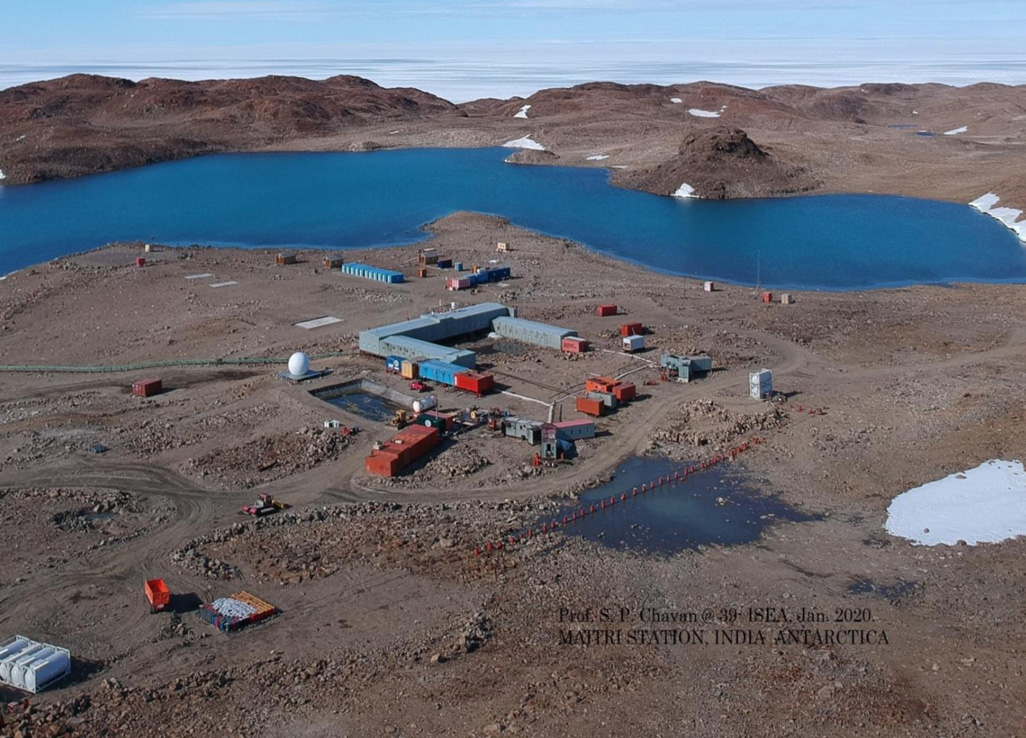
India is set to embark on a new chapter in its Polar exploration journey with the construction of Maitri II. The Indian government plans to establish a new research station near the existing Maitri ba...
The Deep Ocean Mission (DOM), approved by the Government of India in 2021 under the Ministry of Earth Sciences (MoES), represents a strategic step in realizing Sustainable Development Goal 14 (SDG 14:...
A psychological change and not just rules, regulations and institutions are needed for disaster risk reduction. Voluntary compliance of safety norms can be brought about only through sustained investm...
Given India’s population, its density, concentration in particular geographies, and weak state of its institutions of governance, adopting precautionary measures to disaster preparedness becomes imper...
Recent earthquakes highlight the need for a risk reduction strategy, especially for urban centres. With expanding cities, risk to human lives, buildings and infrastructure also increases. Urban safety...
Combining GIS tools with remote sensing data can help in efficient hazard mapping of avalanches in the tectonically active Himalayan regions and save precious lives.
A psychological change and not just rules, regulations and institutions are needed for disaster risk reduction. Voluntary compliance of safety norms can be brought about only through sustained investment and creation of innovative ways of risk communication.
Given India’s population, its density, concentration in particular geographies, and weak state of its institutions of governance, adopting precautionary measures to disaster preparedness becomes imperative. These measures should have roots in deep, systemic scientific analysis based on flexible, responsive governance structures.
Recent earthquakes highlight the need for a risk reduction strategy, especially for urban centres. With expanding cities, risk to human lives, buildings and infrastructure also increases. Urban safety has thus gained importance in recent years.